Wednesday, October 4, 2023

Wednesday, September 20, 2023
IC 1396 - Elephant Trunk and More plus First Light!
IC 1396 is a very large cloud of ionized gas and dust located approximately 2400 light-years away in the constellation Cepheus. Within its confines is IC 1396A or commonly referred to as the Elephant Trunk Nebula because of its similar appearance. It sits on the top portion of my image pointing upwards. Most visible light images show IC 1396A as dark, however, that is because it glows in the infrared portion of the electromagnetic spectrum as does the famous Horsehead Nebula. Several very young stars have been detected in the Elephant Trunk indicating that it is an active stellar nursery.
The really bright orange star located on the lower left at the edge of the nebula is Mu Cephei or Herschel's Garnet Star. It is a red supergiant nearly 100,000 times brighter than the Sun, one of the largest known stars. If it were placed in the Sun's position it would engulf the orbit of Mars and maybe Jupiter. It is also nearing its death as it has burned up all of its hydrogen and is now fusing helium into carbon. Another region I find fascinating is the lower portion, in particular the numerous dark splotches scattered around. They are known as Bok globules and are isolated small dark nebulae, containing dense cosmic dust and gas from which star formation may take place. I also like the canyon appearance on the upper portion of the trunk, the 3d effect really pops out if you scroll in. Lastly, many images of this including my previous versions have the surrounding area darkened in order to highlight the main portion,I chose not to do that this time in order to bring out the dark nebulae scattered throughout this dusty region.
So this is my first image taken with the Askar FRA300 Pro 60mm and I am very happy with the results. I received the astrograph/telescope six months ago but I have been very busy with other things and only now have had time to activate it. Ironically it is also the first light for the replacement ASI2600MC as my old one had the dreaded grease leak. The detail I was able to pull out was much better than any of my previous attempts on this nebula.

IC 1396 - Elephant Trunk and More plus First Light!
Dates: 8-12-23, 8-15, 8-19, 8-20
Camera: ZWO ASI2600MC Pro
Telescope: Askar FRA300 Pro
Barlow: None
Focal Length: 300mm
F/5
Focal Reducer: None
Mount: Orion Atlas Pro
Filter Adaptor: ZWO Filter Drawer
Filter: IDAS NBZ
Focuser: ZWO EAF
Autoguiding: ASI120 Mini attached to a ZWO Mini guidescope
Exposure: UV-IR 76 x 90, NBZ 85 x 300
Gain: 100
Offset 0
Temp: 0 C
Processing: Asiair app, PixInsight, Photoshop, BlurXT, NoiseXT, StarX, Bill's Colormasks, Bill's Linked Stretch
https://www.instagram.com/astroquest1/
http://astroquest1.blogspot.com/
https://www.astrobin.com/users/kurtzepp/collections/
http://youtube.com/AstroQuest1
The really bright orange star located on the lower left at the edge of the nebula is Mu Cephei or Herschel's Garnet Star. It is a red supergiant nearly 100,000 times brighter than the Sun, one of the largest known stars. If it were placed in the Sun's position it would engulf the orbit of Mars and maybe Jupiter. It is also nearing its death as it has burned up all of its hydrogen and is now fusing helium into carbon. Another region I find fascinating is the lower portion, in particular the numerous dark splotches scattered around. They are known as Bok globules and are isolated small dark nebulae, containing dense cosmic dust and gas from which star formation may take place. I also like the canyon appearance on the upper portion of the trunk, the 3d effect really pops out if you scroll in. Lastly, many images of this including my previous versions have the surrounding area darkened in order to highlight the main portion,I chose not to do that this time in order to bring out the dark nebulae scattered throughout this dusty region.
So this is my first image taken with the Askar FRA300 Pro 60mm and I am very happy with the results. I received the astrograph/telescope six months ago but I have been very busy with other things and only now have had time to activate it. Ironically it is also the first light for the replacement ASI2600MC as my old one had the dreaded grease leak. The detail I was able to pull out was much better than any of my previous attempts on this nebula.

Dates: 8-12-23, 8-15, 8-19, 8-20
Camera: ZWO ASI2600MC Pro
Telescope: Askar FRA300 Pro
Barlow: None
Focal Length: 300mm
F/5
Focal Reducer: None
Mount: Orion Atlas Pro
Filter Adaptor: ZWO Filter Drawer
Filter: IDAS NBZ
Focuser: ZWO EAF
Autoguiding: ASI120 Mini attached to a ZWO Mini guidescope
Exposure: UV-IR 76 x 90, NBZ 85 x 300
Gain: 100
Offset 0
Temp: 0 C
Processing: Asiair app, PixInsight, Photoshop, BlurXT, NoiseXT, StarX, Bill's Colormasks, Bill's Linked Stretch
https://www.instagram.com/astroquest1/
http://astroquest1.blogspot.com/
https://www.astrobin.com/users/kurtzepp/collections/
http://youtube.com/AstroQuest1
Friday, September 8, 2023
Sh2-155 - Cave Nebula
Sh2-155 or more commonly known as the Cave Nebula is a complex region in the constellation Cepheus that contains emission, reflection, and dark nebulae. The most eye-popping part is the ionized hydrogen (Ha) region which supports star formation approximately 2400 light-years away. It also happens to lie at the edge of the much larger Cepheus Molecular cloud so it is plenty dusty! To make things more interesting there is a less popular reflection nebula nearby in Cepheus known as Ced 201 or VdB 152 which also goes by the nickname the Cave Nebula. Patrick Moore included Sh2-155 in his catalog as Caldwell 9 but also nicknamed it the Cave Nebula even though Ced 201 was previously nicknamed the Cave Nebula.
This was the fourth time for me on this object and the second time using the SHO palette. The other two were widefield and with the dual band filter. This narrowband SHO image came out much better than my first attempt partly due to better filters and better processing techniques. The Antlia 3nm filters just bring out the fine detail more than the capable 7nm filters I was using. I probably could have brought out the surrounding nebulosity amore but I like the fading translucent look.
I had some issues with WBPP in PixInsight when stacking as it left stripes running down the SII and OIII stacked images. I remade flats and darks and did a bunch of experiments before I zeroed in on PI where I posted the issue on the forum as well as the Facebook page. The answer from a PI Top Contributor (Vicent) was I needed to 'deactivate the Linear Correction under the Lights tab'. Apparently it is not needed for CMOS cameras. I also had issues with using the EZ Processing suite, in particular I had been using the EZ Soft Stretch scripts as part of my normal routine. However, Dark Archon, the developer, had other commitments so were not usable for a time. Looking for a new easy way (I am lazy) to stretch linear data I came across Bill Blanchan's Pixel Math scripts which I used here. He wrote back with directions on how to reinstall the EZ Processing suite if I wanted to still use it. As of this writing I like Bill's method better.

Sh2 - Cave Nebula
Dates: 7-30-23, 8-1, 8-2, 8-8, 8-9, 8-11, 8-13, 8-18, 8-19
Camera: ZWO ASI1600MM-Pro
Telescope: Astro-Tech AT115EDT 115mm Refractor Telescope
Barlow: None
Focal Length: 805mm (644mm w/ FR)
f/7
Focal Reducer: 0.8x AstroTech Field Flatterner/Focal Reducer
Mount: Orion Sirius
Filter Wheel: ZWO
EFW 8 x 1.25"
Filter: Antlia Ha, OIII, SII; ZWO L, R, G, B
Focuser: ZWO EAF
Autoguiding: ASI120 Mini attached to an Agena 50mm Guide Scope/ZWO 60mm Guidescope
Exposure: Ha 77 x 300, OIII 68 x 300, SII 71 x 300, R 48 x 90, G 48 x 90, B 49 x 90
Gain: 139
Offset 20
Sensor Temp: 0 C
Processing: NINA, PixInsight, Photoshop, BlurXTerminator, StarXTerminator, NoiseXTerminator, Bill Blanchan Masks, Bill Blanchan Stretch.
https://www.instagram.com/astroquest1/
http://astroquest1.blogspot.com/
https://www.astrobin.com/users/kurtzepp/collections/
http://youtube.com/AstroQuest1
This was the fourth time for me on this object and the second time using the SHO palette. The other two were widefield and with the dual band filter. This narrowband SHO image came out much better than my first attempt partly due to better filters and better processing techniques. The Antlia 3nm filters just bring out the fine detail more than the capable 7nm filters I was using. I probably could have brought out the surrounding nebulosity amore but I like the fading translucent look.
I had some issues with WBPP in PixInsight when stacking as it left stripes running down the SII and OIII stacked images. I remade flats and darks and did a bunch of experiments before I zeroed in on PI where I posted the issue on the forum as well as the Facebook page. The answer from a PI Top Contributor (Vicent) was I needed to 'deactivate the Linear Correction under the Lights tab'. Apparently it is not needed for CMOS cameras. I also had issues with using the EZ Processing suite, in particular I had been using the EZ Soft Stretch scripts as part of my normal routine. However, Dark Archon, the developer, had other commitments so were not usable for a time. Looking for a new easy way (I am lazy) to stretch linear data I came across Bill Blanchan's Pixel Math scripts which I used here. He wrote back with directions on how to reinstall the EZ Processing suite if I wanted to still use it. As of this writing I like Bill's method better.

Sh2 - Cave Nebula
Dates: 7-30-23, 8-1, 8-2, 8-8, 8-9, 8-11, 8-13, 8-18, 8-19
Camera: ZWO ASI1600MM-Pro
Telescope: Astro-Tech AT115EDT 115mm Refractor Telescope
Barlow: None
Focal Length: 805mm (644mm w/ FR)
f/7
Focal Reducer: 0.8x AstroTech Field Flatterner/Focal Reducer
Mount: Orion Sirius
Filter Wheel: ZWO
EFW 8 x 1.25"
Filter: Antlia Ha, OIII, SII; ZWO L, R, G, B
Focuser: ZWO EAF
Autoguiding: ASI120 Mini attached to an Agena 50mm Guide Scope/ZWO 60mm Guidescope
Exposure: Ha 77 x 300, OIII 68 x 300, SII 71 x 300, R 48 x 90, G 48 x 90, B 49 x 90
Gain: 139
Offset 20
Sensor Temp: 0 C
Processing: NINA, PixInsight, Photoshop, BlurXTerminator, StarXTerminator, NoiseXTerminator, Bill Blanchan Masks, Bill Blanchan Stretch.
https://www.instagram.com/astroquest1/
http://astroquest1.blogspot.com/
https://www.astrobin.com/users/kurtzepp/collections/
http://youtube.com/AstroQuest1
Tuesday, August 29, 2023
Interesting Stacking Issue with Sulfer and Oxygen - Any Thoughts?
I collected 90 second frames of R, G, B and 300 second frames of Ha, OIII, and SII. I then stacked them using the default setting of WBPP in PixInsight as I always do. The R, G, B, and Ha came out looking really well, however, the SII and OIII to a lesser extent had a weird stripe from top to bottom. I did some experiments and the results are leaving me a bit confused.
Experiment:
I restacked the SII with no darks, flats, and bias and there was no stripe. I then stacked them with the darks and the stripe was back. Eureka - the darks are somehow the problem! To be sure I restacked them again with only the flats and there was no stripe.
The confusing part is the same darks were also used for the Ha. If the darks were the issue, the Ha should also be affected.


Anyone have any ideas?
Telescope: Astro-Tech AT115EDT 115mm Refractor Telescope
Focal Length: 805mm (644mm w/ FR)
f/7
Focal Reducer: 0.8x AstroTech Field Flatterner/Focal Reducer
Mount: Orion Sirius
Filter Wheel: ZWO
EFW 8 x 1.25"
Filter: Antlia Ha, OIII, SII; ZWO L, R, G, B
Focuser: ZWO EAF
Autoguiding: ASI120 Mini attached to an Agena 50mm Guide Scope/ZWO 60mm Guidescope
Exposure: Ha 77 x 300, OIII 68 x 300, SII 71 x 300, R 78 x 90, G 48 x 90, B 49 x 90
Gain: 139
Sensor Temp: 0 C
Experiment:
I restacked the SII with no darks, flats, and bias and there was no stripe. I then stacked them with the darks and the stripe was back. Eureka - the darks are somehow the problem! To be sure I restacked them again with only the flats and there was no stripe.
The confusing part is the same darks were also used for the Ha. If the darks were the issue, the Ha should also be affected.
Results:
Figure 1 - SII stacked with darks, flats, and bias

Figure 2 - SII stacked with no support frames

Figure 3 - SII stacked with flats only

Figure 4 - SII stacked with darks only

Figure 5 - OIII stacked with darks, flats, and bias

Figure 6 - Ha stacked with darks, flats, and bias

Equipment:
Camera: ZWO ASI1600MM-ProTelescope: Astro-Tech AT115EDT 115mm Refractor Telescope
Focal Length: 805mm (644mm w/ FR)
f/7
Focal Reducer: 0.8x AstroTech Field Flatterner/Focal Reducer
Mount: Orion Sirius
Filter Wheel: ZWO
EFW 8 x 1.25"
Filter: Antlia Ha, OIII, SII; ZWO L, R, G, B
Focuser: ZWO EAF
Autoguiding: ASI120 Mini attached to an Agena 50mm Guide Scope/ZWO 60mm Guidescope
Exposure: Ha 77 x 300, OIII 68 x 300, SII 71 x 300, R 78 x 90, G 48 x 90, B 49 x 90
Gain: 139
Sensor Temp: 0 C
Wednesday, August 23, 2023
LDN 1251 - A Dark Nebula in Cepheus
LDN 1251 is a dark nebula found in a faint glowing molecular cloud. Located approximately 1,000 light-years away (LY) in the constellation Cepheus the molecular cloud contains other dark nebulae as well as bright patches of nebulosity associated with newborn stars known as Herbig-Haro (HH) objects. In addition, two small galaxies stand out in this region - PGC 166755, located in the center left shows some structure and PGC 69472 located in the bottom center.
Capturing went pretty well as we had some clear weather last month although the green and blue channels seem to be more dull compared to the red channel - this was most likely due to the smoky skies that have been plaguing us all summer long. Processing was pretty smooth as well. The only thing that I don't like is the geometric shape of the bright yellow star HR8625 located in the bottom of the nebula. That shape is due to reflections on the ZWO ASI1600 camera sensor - it doesn't handle large stars well. The nebular color is what came through. For once I did very little color adjustment other than brightening with vibrance and saturation.


LDN 1251
Dates: 6-15-23, 7-19, 7-20, 7-21, 7-22, 7-23, 7-24
Camera: ZWO ASI1600MM-Pro
Telescope: Astro-Tech AT115EDT 115mm Refractor Telescope
Barlow: None
Focal Length: 805mm (644mm w/ FR)
f/7
Focal Reducer: 0.8x AstroTech Field Flatterner/Focal Reducer
Mount: Orion Sirius
Filter Wheel: ZWO
EFW 8 x 1.25"
Filter: Antlia Ha, ZWO L, R, G, B
Focuser: ZWO EAF
Autoguiding: ASI120 Mini attached to an Agena 50mm Guide Scope/ZWO 60mm Guidescope
Exposure: L 199 x 120, R 87 x 90, G 92 x 90, B 90 x 90
Gain: 139
Offset 20
Sensor Temp: 0 C
Processing: NINA, PixInsight, Photoshop, BlurXTerminator, StarXTerminator, NoiseXTerminator.
https://www.instagram.com/astroquest1/
http://astroquest1.blogspot.com/
https://www.astrobin.com/users/kurtzepp/collections/
http://youtube.com/AstroQuest1
Capturing went pretty well as we had some clear weather last month although the green and blue channels seem to be more dull compared to the red channel - this was most likely due to the smoky skies that have been plaguing us all summer long. Processing was pretty smooth as well. The only thing that I don't like is the geometric shape of the bright yellow star HR8625 located in the bottom of the nebula. That shape is due to reflections on the ZWO ASI1600 camera sensor - it doesn't handle large stars well. The nebular color is what came through. For once I did very little color adjustment other than brightening with vibrance and saturation.


Dates: 6-15-23, 7-19, 7-20, 7-21, 7-22, 7-23, 7-24
Camera: ZWO ASI1600MM-Pro
Telescope: Astro-Tech AT115EDT 115mm Refractor Telescope
Barlow: None
Focal Length: 805mm (644mm w/ FR)
f/7
Focal Reducer: 0.8x AstroTech Field Flatterner/Focal Reducer
Mount: Orion Sirius
Filter Wheel: ZWO
EFW 8 x 1.25"
Filter: Antlia Ha, ZWO L, R, G, B
Focuser: ZWO EAF
Autoguiding: ASI120 Mini attached to an Agena 50mm Guide Scope/ZWO 60mm Guidescope
Exposure: L 199 x 120, R 87 x 90, G 92 x 90, B 90 x 90
Gain: 139
Offset 20
Sensor Temp: 0 C
Processing: NINA, PixInsight, Photoshop, BlurXTerminator, StarXTerminator, NoiseXTerminator.
https://www.instagram.com/astroquest1/
http://astroquest1.blogspot.com/
https://www.astrobin.com/users/kurtzepp/collections/
http://youtube.com/AstroQuest1
Friday, August 18, 2023
Dwarf II Images
Dwarf Labs recently sent their portable Dwarf II Smart Telescope review. I have made four Youtube videos on setting up and using the Dwarf II as well as basic processing. The Dwarf system consists of the following:
Telescope Parameters:
- Aperture Diameter: 24mm- Focal Length of the Telephoto: 100 mm
- F-number: 4.2 (Tele lens), 2.4 (Wide lens)
- Field of View: 3° (Tele lens), 50° (Wide lens)
- Digital Resolution: 8 Megapixel (Tele lens), 2 Megapixel (Wide lens)
Hardware Parameters:
- CPU: 4-Core Cortex-A7 1.5GHz
- NPU: 2 TOPS NPU
- Sensor: SONY IMX415 Starvis
- Motor: 0.001 °/s~30 °/s
- Visibility Angle: Pitch 240°, rotation 340°
- Battery: Replaceable, 5600mAh
- Mounting Screw Thread: 1/4″
Interactive Parameters
- Connectivity: WiFi & Bluetooth
- Compatible System: iOS & Android
- API: Available
- TF Card Capacity: 512 GB Max
- Waterproof: IP54
- Storage Format: JPG, PNG, RAW
- Operating Temperature: 14~113°F / -10~45°C
Also, the camera is capable of recording at 30 frames per second.
The following are images produced using the Dwarf II.
Sun

Date: 8-2-23
Camera:SONY IMX415 Starvis
Focal Length: 100mm
f/4.2
Mount: Dwarf II
Filter: None
Exposure: 1/320s
Gain: 100
Sensor Temp: 15 C
 Telescope: Dwarf II Telephoto
Focal Length: 100mm
f/4.2
Mount: Dwarf II
Filter: None
Sensor Temp: 15 C
Processing: Autostakkaert, PIPP, PixInsight, Photoshop, BlurXTerminator, StarXTerminator, NoiseXTerminator.
NGC7000 - North America Nebula

Date: 7-30-23
Camera:SONY IMX415 Starvis
Focal Length: 100mm
f/4.2
Mount: Dwarf II
Filter: None
Exposure: 735 x 10
Gain: 100
Sensor Temp: 15 C
Processing: PixInsight, Photoshop, BlurXTerminator, StarXTerminator, NoiseXTerminator.
Sensor Temp: 15 C
Processing: PixInsight, Photoshop, BlurXTerminator, StarXTerminator, NoiseXTerminator.
M27 - Dumbbell Nebula

Date: 8-2-23
Camera:SONY IMX415 Starvis
Focal Length: 100mm
f/4.2
Mount: Dwarf II
Filter: None
Exposure: 18 x 10
Gain: 100
Sensor Temp: 15 C
Processing: PixInsight, Photoshop, BlurXTerminator, StarXTerminator, NoiseXTerminator.
Sensor Temp: 15 C
Processing: PixInsight, Photoshop, BlurXTerminator, StarXTerminator, NoiseXTerminator.
http://astroquest1.blogspot.com/
https://www.astrobin.com/users/kurtzepp/collections/
http://youtube.com/AstroQuest1
Wednesday, August 9, 2023
Autostakkert Correction
On a recent Youtube video, Solar Imaging with the Dwarf II & Simple processing - PIPP, Autostakkert, & Photoshop (https://www.youtube.com/watch?v=F97iid78hIQ&t=638s), using Autostakkert I wanted to stack 200 frames but only stacked 2.
Figure 1 - Corrected image, 200 frame stack


Figure 3 - Corrected & colorized image, 200 frame stack


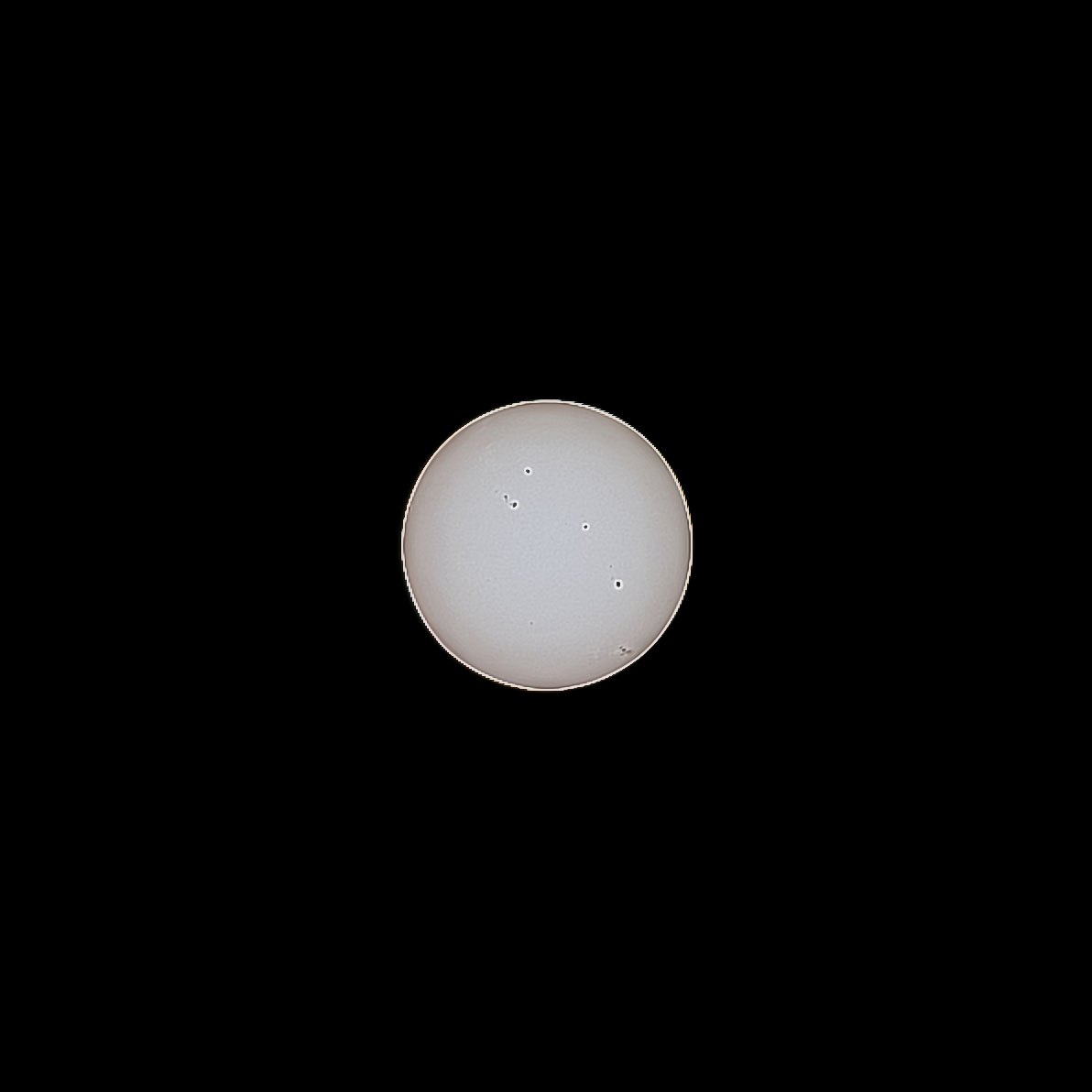
Figure 2 - Original image, 2 frame stack


Figure 4 - Original colorized image, 2 frame stack

Subscribe to:
Posts (Atom)