Friday, December 7, 2012
Saturday, December 1, 2012
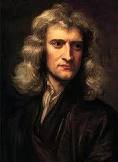
It's Newton!
DECEMBER 2012
In the later years, Newton became a member of Parliament and also secured a post at the Royal Mint. In 1699 he became Master of the Mint and held on to this position until his death. He took this position very seriously as counterfeiting was considered high treason punishable by hanging and then being drawn and quartered. Newton was made president of the Royal Society in 1703 and knighted in 1705. He died in London in 1727 and was buried in Westminster Abbey.
sources:
wikipedia: Isaac Newton
Friday, November 23, 2012
Botany and Physics meet at the NYBG
Every year since 1992 the New York Botanical Garden puts on the Holiday Train Show that features model trains and trolleys winding their way though New York area landmarks. The models, handmade by Paul Busse and his group from Applied Imagination, are constructed from sticks, bark, stems, and seeds among other natural materials. We have visited this evolving seasonal exhibit for years and are always pleasantly surprised, minus the crowds of course (they get smaller ounce you get past the beginning).
The bridges zigzag throughout the entire exhibit and are very sturdy and well built. An engineering marvel put together with twigs and such. Other models show intricate craftsmanship and authenticity as the models represent what original building looked like when first constructed.
Tuesday, November 20, 2012
A Visit To Tory's Cave
Our newly formed, or perhaps want-to-be-formed, Seymour High School Faculty Adventure club consisting of Jim Freund (Assistant Principal), Stephanie Shelinsky (English), Paula Burton (Math) and yours truly (Science) explored Tory's Cave in New Milford CT. Jim, no relation to Marlin Perkins sidekick on Mutual of Omaha's Wild Kingdom but is a former Outdoor Guide, led the expedition. He explained how the cave got its name during the Revolutionary days when British sympathizers (Torys) used to hide out in the cave. The cave is one of very few solution formed caves in Connecticut and the only one open to the public. The passage was narrow and drops into to a larger room capable of holding perhaps a dozen people.| Other Pics |
Saturday, November 10, 2012
Ouch - Hot Pizza!
When eating pizza the recently with my family, my wife and I burned the roof of our mouth's as so many people do. The next time we had pizza we waited several minutes before chowing down. While waiting my son was asking why the crust did not feel hot while the cheese was very steamy even after several minutes. A great question!I immediately proceeded in giving some long-winded explanation to an 8-year old about the heat capacity of cheese being higher than the heat capacity of the crust. Of course I had to explain that heat capacity (C) is amount of heat energy (q) needed to raise the temperature (Δ T) of a specific amount of substance (mass, m).
The formula: q = C × m × (Δ T)
The higher the Heat Capacity the longer it stays hot. In addition, bread is a good insulator so it transfers heat very slowly while mozzarella cheese being a better conductor transfers heat faster.
After after giving this explanation I asked my son if he understood, to which he replied, "Oh I got it, the crust has lots of holes in it like bread or bubbles which means it won't get as hot". His explanation is essentially correct (replace get as hot with hold as much heat) and is simpler to understand than mine. The crust is much less dense than the cheese, thus the same volume of cheese can hold a lot more heat than the same volume of crust. In think I will run explanations through him from know on.
Believe it or not, others have studied this topic. For more information checkout: The Thermodynamics of Pizza from ChemPRIME.
Thursday, November 1, 2012
And the Winner is...
NOVEMBER 2012
Other achievements of Mendeleev include the investigation of the thermal expansion of liquids and the composition of petroleum. In 1893 he was appointed Director of the Bureau of Weights and Measures where he developed new standards for vodka production (must be 40% alcohol by volume).
Though Mendeleev received many awards throughout his career including the Copley Medal from the Royal Society of London, he was never awarded a Nobel Prize due in part to rivalries with other scientists of the time including one with Svante Arrhenius. Mendeleev probably got the last laugh, however, since he is more known now than any of the others that were jealous of him plus he has a crater on the Moon named in his honor.
Saturday, October 20, 2012
Big Week in Chemistry Coming Up!
October 21 - 27, 2012 is National Chemistry Week (NCW) (sponsored by the American Chemical Society) and marks the 25th anniversary of the NCW program designed to promote the value of chemistry in everyday life. This years theme is Nanotechnology: The Smallest Big Idea In Science and is a partnership between NCW and Nanoscale Informational Science Education Network (NISE). Yes, a couple of tongue twisters.Also happening this week is National Mole Day (sponsored by the National Mole Day Foundation) which takes place 6:02 am and 6:02 pm on October 23 in honor of Avogadro's Number (6.02 × 10²³) which is a basic unit of measurement in chemistry (602-1023 is also my colleague's, Mr. Ciccone, phone number, or so he tells his students). If refers to the number of particles in one mole of substance.
(from the mole day website)
For a given substance, one mole is a mass (in grams) whose number is equal to the atomic mass of the substance. For example: carbon has an atomic mass 12, therefore one mole of carbon is 12 grams. One mole of substance contains 6.02 × 10²³ particles of that substance. This relationship was first recognized by Amadeo Avogadro. Thank you Amadeo!
sources:
American Chemical Society
National Mole Day Foundation, Inc
wikipedia
Subscribe to:
Posts (Atom)